Assisted Living Tour Checklist for Palm Bay Communities
A room-by-room checklist to help Palm Bay families compare assisted living visits, ask clearer questions and review costs before deciding.
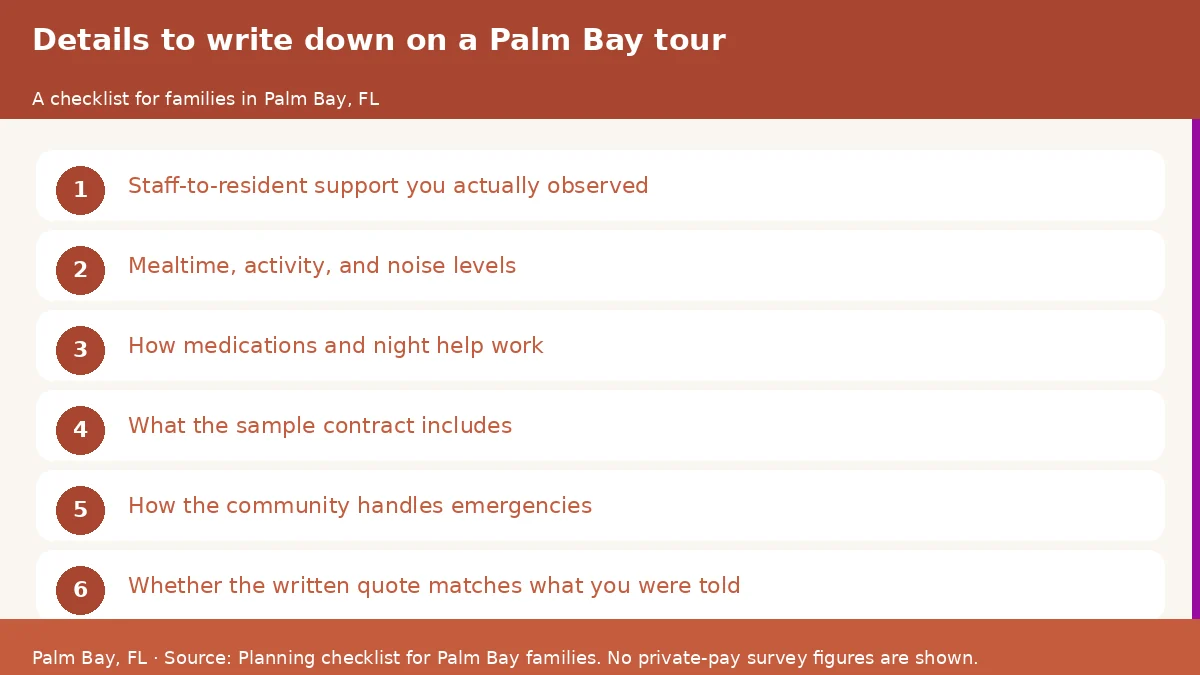
A tour is easier to judge when the same questions follow you from one building to the next. If you are looking for an assisted living tour checklist for Palm Bay, FL, use this guide to record what you see, what staff explain and what still needs a written answer. It fits large communities as well as Home At Last Of Brevard, a small cottage-style home at 380 Englar Ave NE in Palm Bay that offers assisted living, memory care and respite care.
Bring the person who may live there whenever practical, and let their comfort and preferences shape the notes.
Before you visit: assisted living tour checklist for Palm Bay, FL
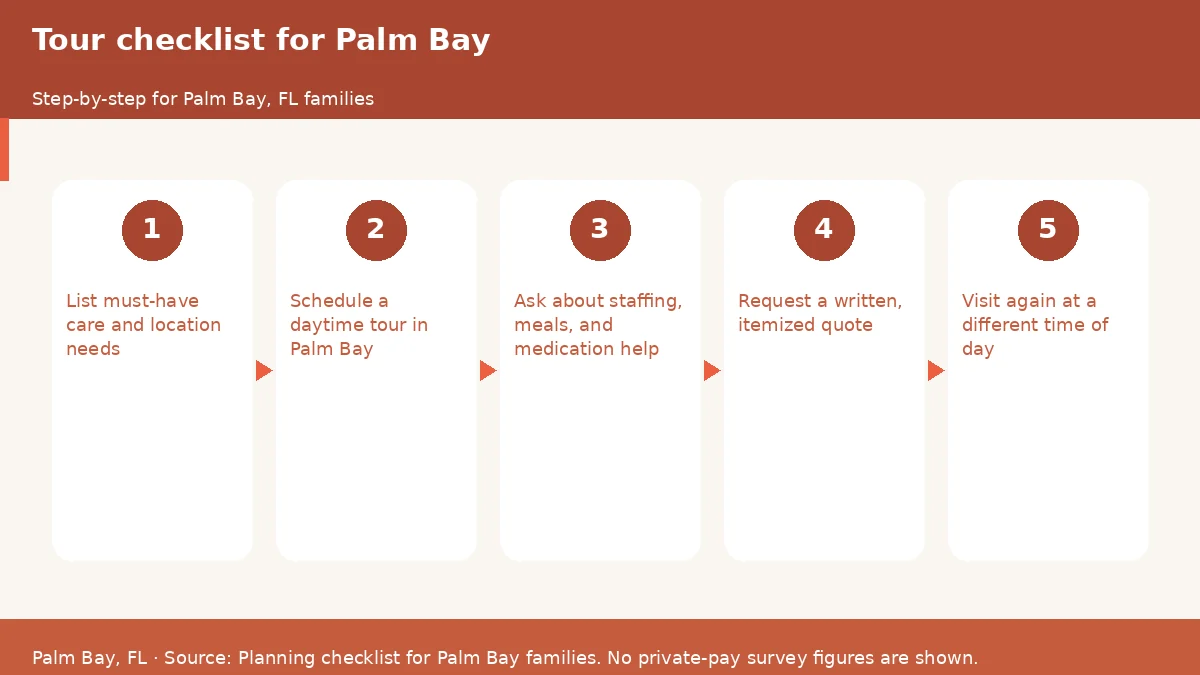
Start with the help needed on an ordinary day, not with a preferred floor plan or an attractive activity calendar. A clear list makes it easier to ask whether the setting can support the person without unnecessary assumptions.
- Write down the help currently needed with bathing, dressing, mobility, meals, medications and memory.
- Note recent changes, routines that matter and situations that cause confusion or frustration.
- Confirm who will lead the tour, whether the person can join a meal and how much time is available.
- Request a current fee sheet, a blank residency agreement and licensing information for later review.
- Prepare questions in the same order for every visit so the answers can be compared fairly.
Drive the route family members would actually use, including Malabar Road or Interstate 95 if relevant. Note the distance for relatives coming from West Melbourne, Melbourne or elsewhere in Brevard County. Palm Bay heat, heavy rain and seasonal storms can also affect arrival, walking between vehicles and entrances, and the usefulness of outdoor areas.
First impressions around the property
Arrive early enough to observe the entry and common areas before the formal conversation begins. First impressions should raise questions, not settle the decision by themselves.
- Are entrances, hallways, dining areas and bathrooms clean, well maintained and easy to move through?
- Do staff greet residents respectfully and respond patiently when someone needs assistance?
- Is the noise level comfortable, and are there quieter places to sit or talk?
- Can residents use outdoor space comfortably, with consideration for shade and warm weather?
- Are personal items and furnishings treated as part of someone's home rather than as clutter?
Notice whether residents appear to have choices about where to sit and how to spend their time. Also observe the tour itself: a useful visit includes care areas and everyday routines, not only the most polished spaces.
Staff, care plans and memory support
Florida's Agency for Health Care Administration licenses assisted living facilities and describes separate specialty license types. Its assisted living regulatory overview also notes Florida's dementia-training requirement for staff in facilities that advertise memory care. Ask which license applies and how training is maintained, without assuming that a license describes every service a resident may need.
- Who completes the initial assessment, and how is the service plan reviewed when needs change?
- Who provides personal assistance during mornings, evenings and overnight?
- How are medication assistance, refills, documentation and family communication handled?
- How are vacations, staff absences and unexpected changes in coverage managed?
- How are residents' preferences, privacy and ability to make choices respected?
- What happens if a resident needs more support than the current arrangement provides?
When dementia is part of the picture, ask how memory care is organized around supervision, cueing, familiar routines and a calm environment. Ask to see the areas used for this support and how staff respond when someone becomes confused or tries to leave unsafely.
Safety and severe-weather questions
Safety is easier to assess through specific situations than through a general assurance that a property is secure. Ask staff to explain procedures in plain language.
- How does a resident request help from a bedroom, bathroom or common area?
- Where are grab bars, suitable lighting and accessible bathroom features located?
- How are residents who may wander supervised, particularly near exits and outdoor areas?
- What are the evacuation, shelter and supply plans for hurricanes or other severe weather?
- How are families notified during an emergency, and how is a return after a hospital stay handled?
Ask which features are present in the room and bathroom actually being considered. A feature shown elsewhere on a tour should not be assumed to come with every accommodation.
Dining and daily nutrition routines
A menu shows what is planned; a meal shows how dining works. If possible, observe whether residents have enough time, whether assistance is offered discreetly and whether the room feels manageable for the person touring.
- Ask for a current menu and alternatives when someone dislikes the main choice.
- Ask how allergies, modified textures and other dietary instructions are communicated to kitchen and care staff.
- Find out how meals, snacks and drinks are made available between scheduled dining times.
- Ask who notices when a resident regularly needs more help eating or is leaving food untouched.
- Clarify guest meals, family dining arrangements and any charges that are separate from the regular rate.
Warm-weather routines are worth discussing locally, including how drinks are offered and how outdoor refreshments are supervised.
Activities, visiting and community life
An activity calendar is a starting point, not evidence of what happens each day. Ask which listed activities are regularly available and how staff learn what a new resident enjoys.
- Are there small-group and individual options for people who do not enjoy busy gatherings?
- How are activities adapted for different mobility, communication and memory needs?
- How are residents invited to participate without being pressured?
- What outdoor activities remain practical during hot or rainy Palm Bay weather?
- When can families visit, join activities or take a resident out for the day?
Ask about transportation and outings separately, including any advance notice or additional charge. For a smaller setting, also ask how the day's routine balances companionship with privacy.
Rooms, bathrooms and personal belongings
Look at the accommodation type that would actually be offered. Room size matters, but so do the route to the bathroom, storage, lighting and the resident's ability to recognize and use the space.
- Is the accommodation private or shared, and what furnishings, linens and utilities are included?
- Which familiar furniture, photographs and decorations can the resident bring?
- Can a mobility device move comfortably through the room and bathroom?
- How are housekeeping, laundry, maintenance and repairs requested and documented?
- What happens if a room change is proposed because care needs or availability change?
Before leaving, make sure the written room description matches what was shown. Ask for clarification on television, internet, telephone service and any items the resident would need to supply.
Costs, contracts and payment questions
Local benchmarks provide context, but they are not a quote. The reports the following Palm Bay Area figures, using its local metro measure.
These comparisons do not show what any individual service package includes.
- What is the base rate, and which personal care services, meals, laundry and housekeeping are included?
- How are additional care charges determined, documented and communicated before they take effect?
- Which deposits, move-in charges or other one-time fees apply, and which are refundable?
- How are absences, hospital stays, room changes, respite stays and memory support billed?
- What notice is required for a rate change or for either party to end the agreement?
Request a sample invoice and enough time to read the residency agreement before paying a deposit. The benchmarks above are not Home At Last Of Brevard's prices. For the home's current rates and availability, call (321) 327-3573 and ask for a written explanation of included services and possible additional charges.
Medicare's long-term care guidance says Medicare does not cover long-term custodial care when that is the only care needed. Florida's Statewide Medicaid Managed Care Long-Term Care program can cover assisted living services for eligible people who need nursing facility level of care, but enrollment is limited and there is a waitlist. Wartime-era Veterans and surviving spouses can also review the VA Aid and Attendance rules; eligibility and pension amounts depend on individual circumstances.
After the visit
After several appointments, the assisted living tour checklist for Palm Bay, FL, becomes a comparison sheet rather than a stack of brochures. Mark each answer as observed, explained verbally or confirmed in writing.
- List the follow-up questions and identify who agreed to answer each one.
- Compare care, safety, dining, rooms and contract terms using the same categories for every property.
- Arrange a second visit at a different time if routines or staffing questions remain unclear.
- Have a trusted family member or adviser review the agreement before commitments are made.
If a short stay is under consideration, ask about respite care. The National Institute on Aging explains respite care as a short-term break for family caregivers that can include short residential stays. Ask what the stay would include and how observations would be shared. A careful comparison preserves both practical details and the person's own preferences.
Frequently asked questions
What should I bring on an assisted living tour in Palm Bay?
Bring a written list of daily help needed, relevant care notes, questions about medications and mobility, and a folder for the fee sheet and residency agreement. Invite the person who may live there whenever practical. Plan the actual family drive, including Malabar Road or Interstate 95 if relevant. In warm or stormy weather, notice entrances, walkways and indoor comfort. Leave space on the checklist for follow-up answers rather than relying on memory.
How much does assisted living cost in Palm Bay?
These are market benchmarks, not quotes or Home At Last Of Brevard's rates. Ask each community for a current written rate sheet, care-related charges, fees, deposit terms and the circumstances that can change the monthly bill.
What memory care questions belong on a Palm Bay tour?
Ask how staff provide supervision, cueing and help with daily routines, and how the environment is arranged for people who may become confused or wander. Ask who is present overnight, how families are updated and how a care plan changes. Florida requires dementia-related staff training in facilities that advertise memory care, so ask how that training applies to the team. A tour should show support and environment, not promise a change in dementia.
Does Medicare pay for assisted living in Palm Bay?
Medicare generally does not cover long-term custodial care when that is the only care needed, which includes much of the daily support people seek in assisted living. Ask for a written explanation of what is and is not included in the monthly bill. Florida Medicaid's long-term care program may help eligible people who meet level-of-care rules, but enrollment is limited and there is a waitlist. Veterans and surviving spouses can also ask about VA pension and Aid and Attendance rules.
Can a respite stay help before choosing assisted living?
A short respite stay may help a family understand routines, dining, personal assistance and communication before making a longer commitment, but it should not be treated as a guarantee of fit. The National Institute on Aging describes respite as a short-term break for caregivers, including short residential stays. Home At Last Of Brevard offers respite care in Palm Bay. Ask about availability, the assessment process, what to bring and how the stay would be documented.
Talk with Home At Last Of Brevard
If you are weighing care options in Palm Bay, call (321) 327-3573 or visit. Our team can talk through current availability, rates and next steps. Please confirm all details directly, since published figures and listings change over time.
Sources
- VA Aid and Attendance and Housebound benefits
- Medicare: long-term care coverage
- National Institute on Aging: What is respite care?
- Florida AHCA: Assisted Living Unit
- Florida AHCA: Statewide Medicaid Managed Care Long-Term Care Program
Program rules and benefit amounts were checked on the linked official pages in November 2026 and can change.